CapCut Pro Price 2026 – Ultimate Updated Plan Guide for Creators

A lot of people start searching for the CapCut Pro price right after hitting one annoying wall in the free version. Maybe exports suddenly include locked effects. Maybe auto captions stop working properly. Or maybe those trending templates everyone uses are marked “Pro only.” Many creators reach this stage and start comparing subscription plans more…
A lot of people start searching for the CapCut Pro price right after hitting one annoying wall in the free version. Maybe exports suddenly include locked effects. Maybe auto captions stop working properly. Or maybe those trending templates everyone uses are marked “Pro only.”
Many creators reach this stage and start comparing subscription plans more seriously. They want to know if the premium version actually makes editing easier or if it only adds extra monthly costs. Looking through the unlocked AI features beforehand can also make regional pricing differences easier to understand.
If you used CapCut a while ago you can see how much CapCut Pro has changed recently. The free version still works for basic editing, sure. But the premium tools now push heavily into AI editing, cloud collaboration, advanced transitions, and creator workflows. Some users love it. Others cancel after one month. A lot depends on how often you actually create and edit content.
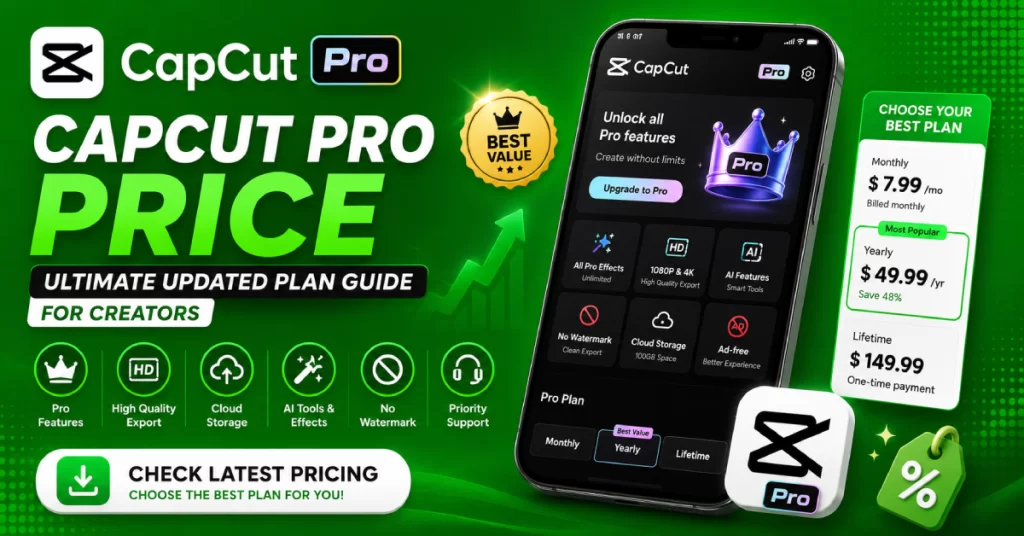
CapCut Pro Pricing at a Glance?
If you only want the short answer first, here’s the quick breakdown.
| Plan Type | Estimated Price (2026) | Best For |
| Monthly Plan | $7.99 to $12.99/month | Casual creators |
| Annual Plan | $74.99 to $119/year | Frequent editors |
| Team Plan | Varies by seats | Agencies & teams |
| Free Version | $0 | Basic editing |
Prices may vary by country, app store taxes, and promotions.
Some regions pay significantly less. Others see higher rates because of local taxes or Apple Store pricing adjustments.
What Makes People Upgrade Anyway?
Most users don’t upgrade because of simple trimming tools. The free version already handles that pretty well.
People usually pay for CapCut when they need:
- AI avatar tools
- Auto caption improvements
- Premium transitions
- Commercial-use assets
- Watermark-free exports
- Cloud collaboration
- Faster editing workflow
That’s where the free version starts feeling limited.
During testing on larger projects with motion blur, layered effects, and AI captions enabled together, export times were noticeably smoother with premium cloud processing compared to the standard free setup. Not magical. But faster enough to matter.
Monthly vs Yearly Subscription Differences?
The biggest difference is cost efficiency.
The monthly option works better for creators who only edit during specific projects or seasons. TikTok campaigns, travel vlogs, short-term client work — stuff like that.
In many cases, the yearly plan lowers the overall subscription cost by nearly 30% to 40%.
A lot of users still forget to pay attention to one important detail though: renewal pricing. Intro discounts sometimes disappear after the first billing cycle. That catches people off guard.
CapCut Subscription Price Compared
Here’s a realistic comparison of CapCut Pro Subscription based on current store averages.
| Subscription Type | Average Cost | Savings |
| Monthly | Around $9.99 | No long-term commitment |
| Yearly | Around $89/year | Lower monthly average |
| Team Access | Custom pricing | Shared workflow tools |
For many users editing multiple videos weekly, the annual plan makes more financial sense after about three months of consistent usage.
Is the Free Version Still Good Enough?
Honestly? For simple edits, yes.
If your content mostly involves:
- short TikTok clips
- meme edits
- basic Instagram reels
- trimming videos
- adding simple music
…then the free version still performs surprisingly well.
But creators posting consistently usually run into limitations pretty fast.
Some effects become unavailable. Certain exports feel restricted. AI features get locked. Cloud storage fills up quickly too.
That’s probably why many users eventually compare CapCut Price plans after a few weeks of regular editing.
What Premium Tools Actually Feel Useful?
Some premium features sound exciting on paper but barely matter in real editing.
Others genuinely save hours.
The most useful paid tools for regular creators tend to be:
AI Auto Captions
These are surprisingly accurate now. Not perfect. But much better than older versions.
For podcast clips and talking-head content, this alone can save a ridiculous amount of manual editing time.
Background Removal
Works well in decent lighting.
Hair detection still struggles occasionally though. Especially with fast movement.
Advanced Effects Library
This matters more for short-form content creators chasing trends.
A lot of viral transition packs sit behind the premium wall now.
Cloud Syncing
For users editing between phone and desktop, this becomes really convenient.
Especially if you regularly download CapCut for desktop and switch devices during projects.
CapCut Pro Price in Different Countries?
Regional pricing creates massive differences.
Some countries pay nearly half compared to others due to local pricing adjustments.
CapCut Pro Price In India
Indian pricing is generally lower than US or UK pricing.
Depending on platform and discounts, many users report yearly plans between ₹3,000 and ₹6,000 annually.
Student creators and freelancers often prefer annual billing because the monthly conversion feels more expensive long term.
CapCut Prices Turkey
Turkey historically offered lower subscription rates because of regional currency differences.
That said, pricing fluctuations happen often due to inflation adjustments and exchange rates. Some older tutorials online now show outdated rates.
Not everyone notices this immediately until checkout totals change.
CapCut Pro Price PC vs Mobile?
There’s no major feature difference anymore between platforms.
Still, pricing can vary slightly depending on:
- Google Play Store fees
- Apple App Store pricing
- desktop direct subscriptions
- taxes
The CapCut Pro Price PC version sometimes receives promotional bundles not visible on mobile.
The Hidden Cost Most Users Ignore?
Storage.
CapCut pushes cloud collaboration heavily now. That sounds convenient until storage limits start affecting workflow.
Large 4K projects eat cloud space surprisingly fast.
During testing, projects using AI enhancement, cinematic filters, and layered audio consumed far more storage than expected. Some creators eventually upgrade storage separately.
That increases the real CapCut Premium Price beyond the advertised subscription itself.
Does CapCut Have a Lifetime Plan?
This gets searched constantly.
People want a one-time purchase instead of another monthly bill.
CapCut Pro Price Lifetime Searches Explained
At the moment, official lifetime plans are generally unavailable in most regions.
Some websites claim to offer permanent unlocked versions. Many of those are unofficial APKs or modified builds.
There are risks:
- account bans
- malware
- unstable exports
- broken cloud syncing
- missing updates
A few users still prefer older standalone versions instead of subscriptions. If that’s your thing, some creators choose to download older versions because certain effects and interfaces feel lighter on slower devices.
Still, long-term support usually disappears on outdated builds.
Has CapCut Become More Expensive?
Short answer: yes.
CapCut Price Increase Discussions
Many users noticed subscription increases during the last two years.
The reason is pretty obvious once you look at the platform direction.
CapCut is no longer just a simple mobile editor. It now competes with:
- Canva
- Premiere Rush
- VN Editor
- InShot Pro
- even lightweight Adobe workflows
AI features also require more server processing, cloud syncing, and rendering infrastructure.
That’s likely part of why CapCut Prices continue rising gradually.
Some users feel the increases are justified. Others think too many basic tools moved behind the paywall.
What You Get Inside the Premium Membership?
Here’s where things become practical.
Features That Actually Matter?
Not every creator needs all premium tools. The useful ones depend heavily on content style.
| Feature | Free Version | Pro Version |
| Basic Editing | Yes | Yes |
| Premium Effects | Limited | Full Access |
| AI Captions | Partial | Full |
| Cloud Storage | Small Limit | Expanded |
| Watermark Removal | Limited | Yes |
| Team Collaboration | No | Yes |
| Commercial Assets | Restricted | Available |
For YouTubers posting weekly content, the editing speed improvements matter more than flashy transitions.
TikTok creators usually care more about trend templates and viral effects.
Team Collaboration Features?
This matters mostly for agencies or creators working with editors.
The CapCut Teams Price varies depending on:
- number of users
- cloud storage
- shared assets
- collaboration tools
Smaller creators usually don’t need team plans at all.
Still, editors managing clients often appreciate shared project workflows because sending giant video files manually becomes exhausting pretty quickly.
Is the Subscription Worth Paying For?
This depends entirely on usage frequency.
If you edit one video every couple months, probably not.
But for creators posting daily content, the time savings become noticeable fast.
Especially with:
- AI captions
- smart cut tools
- auto syncing
- one-click templates
- cloud access
Some users recover the subscription cost simply by finishing edits faster.
That said, CapCut still has drawbacks.
Things Users Complain About Most?
Even premium users complain about certain issues regularly.
Performance Problems
Large projects can still lag.
Older laptops struggle with:
- 4K timelines
- heavy transitions
- motion blur
- AI enhancement
On older MacBooks, export speed dropped significantly once multiple cinematic effects stacked together.
Internet Dependency
Some premium AI tools require stable internet access.
Offline editing still works for basics, but cloud-heavy features become unreliable during weak connections.
Subscription Fatigue
A lot of creators already pay for:
- Canva
- Adobe
- stock music
- cloud storage
- scheduling apps
Adding another recurring fee feels annoying.
That’s part of why users constantly compare CapCut Price Plan options before upgrading.
Which Plan Makes Sense for Different Users?
Not everyone needs the same subscription.
Casual Creators
Best option:
- monthly plan
- free version
Good for:
- occasional reels
- hobby edits
- school projects
Full-Time Content Creators
Best option:
- annual subscription
The yearly savings usually outweigh monthly billing pretty quickly.
Agencies & Editing Teams
Best option:
- collaborative team plans
Especially when editors need shared access to templates and projects.
Mobile Editing vs Desktop Editing?
This changes the experience more than people expect.
Editing on Smartphones
Quick. Portable. Convenient.
Perfect for:
- TikTok
- Instagram Reels
- Shorts
Battery drain can get rough though.
Especially during exports.
Some users prefer to use CapCut on Android because newer phones now handle surprisingly complex edits without needing a laptop.
Desktop Editing
Better for:
- longer timelines
- multi-track audio
- detailed color correction
- client projects
For people who do a lot of editing using a mouse and keyboard is still the best way to go because it gives them better speed and control over their work.
What Users Usually Notice After Upgrading?
This part feels interesting because reactions vary wildly.
Some users instantly love the premium upgrade because editing becomes smoother and faster.
Others barely touch the advanced tools they paid for.
Honestly, many creators mainly use:
- captions
- premium templates
- exports
- AI cleanup tools
…and ignore everything else.
That’s why the real value depends more on workflow than feature count.
CapCut Standard Price vs Pro?
The free version competes much better than people expect, even compared to many paid mobile editors.
Once creators start producing content regularly, the premium version often feels more like a practical work tool than just an extra feature.
The CapCut Standard Price technically remains free, but creators eventually pay through limitations instead of money:
- slower workflows
- locked templates
- manual editing
- limited exports
Should Beginners Pay Immediately?
Probably not.
New users usually make better upgrade decisions after spending some real time editing with the free version first.
That helps answer:
- Which features matter?
- How often do you edit?
- Are AI tools actually useful?
- Does your device handle exports smoothly?
At first, many beginners overestimate how many premium features they’ll actually use.
Then reality kicks in.
A Smarter Way to Test the Premium Plan?
The best approach usually looks like this:
- Start with the free version
- Edit 5–10 real projects
- Notice recurring frustrations
- Test one month of premium
- Decide if workflow improvements justify the cost
That method works better than blindly buying yearly access immediately.
You can also explore premium features first to understand what tools fit your editing style before committing long term.
What About Alternatives?
CapCut still dominates short-form editing because it feels easy.
But alternatives exist.
Some creators compare:
- VN Editor
- InShot
- Canva Video
- Adobe Premiere Rush
- DaVinci Resolve
Each has strengths.
CapCut video editor mainly wins because:
- templates move fast
- AI tools feel beginner-friendly
- mobile workflow stays simple
- TikTok integration feels seamless
That convenience matters more than people think.
Does the App Feel Different After Recent Updates?
Yes. Quite a bit.
The interface now pushes AI workflows more aggressively than before.
Some creators like that.
Others miss the simpler editing experience from earlier versions.
Users wanting extra tutorials sometimes discover new editing tips because newer updates quietly move settings around after major releases.
A lot of users have been mentioning that problem repeatedly lately.
Final Thoughts on CapCut Pro Price?
Creators posting content regularly often understand the value behind the CapCut Pro price because the premium tools and AI features help speed things up. Casual users usually do fine sticking with the free version for lighter editing needs.
A monthly trial usually makes more sense for people unsure about upgrading. It gives enough time to understand whether the premium features fit the editing routine naturally or only look good in marketing previews.
If you edit videos consistently, post content frequently, or handle client work, the paid version can genuinely help save time during the editing process. And honestly, time becomes the biggest currency once content creation turns serious. Before subscribing long term, you can always check the updated version and compare current tools with your actual editing needs.
Frequently Asked Questions
Is CapCut Pro worth paying for in 2026?
Yes, for creators handling regular uploads, the premium features can improve workflow quite a bit. AI tools, premium templates, and syncing options help save time during editing. Casual users may not notice enough difference to need the subscription. .
Does CapCut Pro remove watermarks completely?
Premium exports usually remove watermarks and give users cleaner export settings overall. Still, some templates or outside assets may continue requiring attribution because of their licensing rules.
Can I use CapCut Pro on multiple devices?
In many situations, project syncing works properly as long as users stay logged into the exact same account. Creators often alternate between desktop and mobile editing without much trouble.
Why do CapCut prices look different in other countries?
Users often notice pricing differences between countries because subscription costs are affected by local taxes, app store pricing systems, and changing currency exchange rates.
Is there an official CapCut lifetime subscription?
Right now, official lifetime access is usually not available. Most legitimate options come through monthly or yearly subscriptions on app stores or desktop billing systems.
CapCut changes fast enough that checking updated plans and testing the tools personally usually helps users make a better decision before subscribing long term.